


The Bachelor of Education in Special Education aims to provide inclusive education that is an essential function for schools to educate children with special needs. Preparing teachers to teach in such contexts requires both depth and breadth of content, pedagogy and practice, as well as specific knowledge and skills to work effectively with all students to promote learning and development and the fostering of appropriate dispositions and attitudes to be successful.

| Course Category | Total Number of Courses | Total Number of Credit Hours |
|---|---|---|
| General Education Courses | 14 | 42 |
| Core Courses | 12 | 36 |
| Concentration Courses | 14 | 42 |
| Free Elective | 2 | 6 |
| Total | 42 Courses | 126 Credit Hours |
| Course Name | Course Code | Credit Hours | Course Description |
|---|---|---|---|
| Academic Writing | ENG 101 | 3 | This course provides students with advanced writing skills in English so that they can successfully pursue their studies in various academic specializations. It helps students to develop, improve, and upgrade their writing and structure skills, and it also acquaints students with technical writing, research papers, and essays since brief research methods are applied in student projects and assignments. |
| Arabic Composition | ARLAA 105 | 3 | This course is designed to enable students to analyze multiple texts in various fields of knowledge. In order to be able to distinguish between texts despite their difference of contents, it also enables student to simulate those texts in a correct way, and to transform the information into skill and behavior. And since writing is an integrated building process, and that the building is affected by its parts, therefore student needs models, linguistic laws, planning, cohesion and goals including: news and inquiries, demand and influence of the recipient. |
| Arabic for Non Arab Speakers | ARLNA 100 | 3 | This course is based on the principle that "Education" is an accumulative task especially when it comes to language learning. This process undergoes specific stages to assist the non-Arabic speakers to reach the ultimate goal which is to acquire the required skills (listening, speaking, reading, writing) easily and accurately. To achieve this aim, text-based dialogues are provided as head start for the non-Arabic speakers to continue to the higher levels. The course also provides basic elements for reading, writing, dialogues, and listening to assist the learners to confidently interact with the Arab community |
| Communication Skills in Arabic | ARLAA 100 | 3 | This course is designed to enable the Arabic-speaking student with the necessary language skills, especially focusing on the steps of writing reports, official letters and systematic research. To achieve this, and to develop the student's abilities to understand correctly what he reads and listens, and to gain the ability to write articles, reports, meeting minutes and recommendations of conferences and seminars in a sound manner, the course was concerned with training the student in basic writing skills; such as multiple spelling rules, punctuation marks, paragraph system, and essay writing progressively. |
| Contemporary Arab Art | DES 104 | 3 | This course explores Arab art and aesthetics from the beginning of the twentieth century till date. The students will learn about the contemporary art and design movement in Arab countries, the expression of cultural identity, as well as the factors involved and changes in aesthetics from Islamic to Arabic art. They will also study and analyze the role of pioneer artists from various generations with emphasis on their influence on contemporary Arab art. |
| Emirati Studies (formerly UAE and GCC Society) | ASC 208 | 3 | The course is designed to introduce the UAE and GCC society with its historical background and uniqueness. It is aimed at enabling students to understand the specific features of the society along with its customs, traditions and lifestyle. The course will introduce the processes and the challenges of development as well as the future aspirations of the UAE and GCC Society. |
| English Literature | ENG 200 | 3 | This course will provide the students with a comprehensive overview of English literature in the United States. It will familiarize the students primarily with early Anglo-American writers and the different literary movements that took place in the United States. Today American literature includes many minority literary works, but the historical matrix remains Anglo-Saxon if we are to consider the dominant culture as the starting historical point. |
| Environmental Science | ASC 211 | 3 | The ‘Principles of Environmental Science’ course is designed to introduce the fundamental concepts of Environmental Science to undergraduate students. It includes topics from different areas of study such as ecology, biology, soil science and atmospheric science. The course aims at raising environmental awareness among students and providing them with the scientific knowledge and skills to identify, prevent and solve environmental problems. Additionally, it deals with ecological concepts, organism interactions, communities and ecosystems. The course focuses on key areas of population dynamics, biodiversity, human activities and the environment managed ecosystems, air quality, water and solid waste management. |
| General Mathematics | MAT 100 | 3 | This course is designed to develop a good understanding of the fundamental concepts of mathematics. It also stresses on crucial cognitive transferable skills such as the ability to think logically and concisely. Mastering this course will give students the confidence to go on and do further courses in mathematics and statistics. |
| General Psychology | ASC 200 | 3 | An introduction to the science of psychology, its theories and foundations. The course is focused on principles and research methodologies, including the following topics: history of psychology, the biology of mind, memory, learning, child and personality development, psychological disorders and therapy. The aim of the course is to introduce the basis of psychology, provide the foundational knowledge to pursue the subject in more depth in the future, and build an ongoing interest in the application of psychology in everyday life. |
| History of Islamic Art | DES 105 | 3 | This course aims to focus on the evolution of Islamic Art through a chronological overview of various ?trends and approaches throughout history. Students will explore and analyze the rise and influence of ?Islam leading to the formation of a new artistic culture the world over.? |
| Innovation and Entrepreneurship | MGT 604 | 3 | This course marks students’ introduction to the theory and practice of innovation and entrepreneurship. Whether they are creating an opportunity or seizing an existing one students explore the core concepts and tools for creating new products or services, new businesses, or new markets from a multilayered perspective. The course examines the fundamentals of innovation in a multitude of settings, operationalizing the entrepreneurial spirit via a comprehensive business plan, and making decisions in the areas of strategic planning, financing, marketing, process improvement, and management with an awareness of the opportunities and challenges of working in an increasingly complex environment regionally and internationally. |
| Introduction to Anthropology | ASC 102 | 3 | This course provides an understanding of anthropology, the study of human beings throughout time and space. Anthropology is a broad discipline that studies human from a holistic perspective looking at both biological and cultural aspects. Anthropologists use different methods in order to understand and study humans. During this course, students will experience ethnographic fieldwork. |
| Introduction to Geography | ASC 206 | 3 | This course will provide the students with a comprehensive overview of geography. Emphasis is on concepts that are necessary to understand global, regional and local issues. This course also includes topics on both human and physical geography. |
| Introduction to Philosophy | ASC 201 | 3 | This course will introduce the students to the key concepts of philosophy and its principle tools. The course will discuss the schools of philosophical thought, and will apply philosophical analysis to the topics of knowledge, religion, mind, freedom, responsibility, and ethics. |
| Introduction to Political Science | ASC 202 | 3 | This course will introduce the students to the key concepts of Political Science and its principal tools. The course will discuss the role of main political actors in the field of politics and their function. |
| Introduction to Research | ASC 207 | 3 | The intent of this course is two-fold. First, it introduces students with the basic research terminologies. Second, it familiarizes them with the process of research from choosing a topic to writing the proposal. Students will be immersed in hands on experience where they will be introduced to research concepts that will help them understand, interpret, and review a journal article. Contents to be covered include the language of research, types of research, elements of scientific research proposal, writing an academic research proposal using APA style, research ethics, identifying data collection instruments, and interpreting data. |
| Introduction to Social Sciences | ASC 110 | 3 | This course serves as an introduction into the interdisciplinary and multifaceted social sciences. The content on the course covers the range of different disciplines that social sciences consists of, namely: anthropology, sociology, psychology, political science, economics and to a lesser extent also history and geography. The secondary aim of the course is moreover for students to develop their critical thinking skills by engaging actively with material about social issues, social change and social institutions. |
| Introduction to Sociology | ASC 104 | 3 | This course introduces the science of Sociology. Students will examine Society, Institutions and the relationships that make up a social context. The scientific methodology used to study social interactions, stratification and other elements of sociological enquiry will be discussed to emphasize the core concept of sociology as a systematic study of societies and social structures. |
| Islamic Civilization | ASC 106 | 3 | The course is designed to give an in-depth understanding of the Islamic civilization. It deals with the universal principles that went into the making of the Islamic civilization. It examines the basic ideas of Islamic civilization besides exploring their contemporary relevance and challenges. The course seeks to effectively address the notion of the ‘clash of civilizations. |
| Islamic Culture | ASC 105 | 3 | This course will expand students’ knowledge to enable them to understand the Islamic culture and its characteristics. It analyzes the sources of legislation in Islam. It offers a review of the history of Islam and how it is currently the fastest growing religion in the world. |
| Middle East History | ASC 204 | 3 | This course provides an overview of Middle-Eastern History, including the sources of Middle Eastern History. The course will conclude with discussions about perspectives on Middle-Eastern History. |
| Natural Science | ASC 210 | 3 | The natural science course incorporates a wide range of subjects of sciences such as astronomy, geology, biology, chemistry, and environmental science. The course will present the scientific facts of astronomy, the Earth and its weather, water, and environment, biology, and nutrition with the chemicals of life. The course emphasizes understanding the core principles of different branches of science and their effects on our lives. Moreover, the course explores the scope of natural phenomena, changing environment conditions, general health rules of nutrition, and the variety of living organisms. The course helps the students to acquire skills in observation, critical thinking, analyzing, interpreting, understanding and discussing scientific terminology and facts. |
| Sustainable Energy | ASC 212 | 3 | This course gives a thorough introduction to sustainable energy, conservation, and energy efficiency within the UAE and the world. It will explore the relationship between energy, environment, economy and ecological well-being. It will discuss energy production from the biology, natural science, environmental science and social sciences perspectives. A variety of topics will be introduced including global warming, climate change, sustainable food production, solid waste management, environmental and natural resources laws. The course includes the growing challenges of climate change and energy crisis and proposes solutions to overcome them. |
| University Life | ASC 101 | 3 | The purpose of this course is to facilitate the process of transition into a new academic and cultural environment for the new students enrolled in the AUE. Furthermore, it aims to promote their confidence so that they can succeed and meet the academic requirements. The course assimilates academic content with interactive in class activities to ensure an understanding of curricular options and begin to develop a future career plan through self-reflection. |
| World History | ASC 203 | 3 | This course provides an overview of World / General History. The course will conclude with discussions about perspectives on World History. It surveys the history of humankind since 250CE till 1990 CE. In addition, interregional, comparative, cross-cultural, transnational, and historiographical topics will be considered. The objective of the course is to explore the roots of contemporary globalization and to develop historical thinking and writing. |
| Course Name | Course Code | Credit Hours | Course Description |
|---|---|---|---|
| Collaboration in Schools – Working with Teams in the Teaching/Learning Process (Arabic) | EDU 224AR | 3 | The purpose of this course is to teach students the importance of collaboration between schools and families of special needs students. Collaborating with families is an important part of the job responsibilities of school professionals working with students with disabilities. This course introduces Parent and Family rights through discussing the Individuals with Disabilities Education Act (IDEA) and understanding that all school personnel must adhere to it. This course focuses on strategies for developing family-appropriate and culturally appropriate family-professional partnerships to benefit children with special needs. |
| Education of Exceptional Children | EDU 223 | 3 | The course teaches skills to general educators and other school and social service providers and community members who are essential in providing inclusive/integrated environments for differently abled children and youth. Environmental modifications including classroom, school, agency, and community/business settings are studied. Classroom modifications in curriculum, assessment, behavior management, and instructional methods are examined. Methods of establishing supportive networks among families, schools, agencies, and private business are presented. The full range of desirable programs in fully inclusive, multicultural settings across the age span is discussed including preschool, transition, vocational, and community-based programs. This course is designed for all educators and related providers who work with students with learning disabilities, attention deficits (with or without hyperactivity), developmental delays, behavior problems or other distinctive disorders. Participants will also gain understanding of students with dyslexia, autism and multiple disabilities |
| Foundation of Education | EDU 110 | 3 | This course aims to expose students to the historical, philosophical and sociological foundations of education. It further seeks to address questions related to the current societal and governmental policies affecting education and teaching profession today and in the future with focus on the United Arab Emirates context. |
| Inclusive Education and Sustainability | EDU 225 | 3 | This course integrates principles of inclusive education and sustainability to prepare educators for creating inclusive and environmentally conscious learning environments for individuals with diverse abilities. Students will explore innovative teaching methods, adaptive resources, and technologies that promote sustainability and accessibility. The course emphasizes the application of Universal Design for Learning (UDL) principles to develop engaging and eco-friendly educational experiences. |
| Introduction to Developmental Psychology | EDU 121 | 3 | Developmental Psychology is the study of why and how humans change over the course of our lifespan, from conception to death. This course is designed to explore topics such as biological, cognitive, emotional, and social development, by conceptualizing the individual as a whole, with special attention to various cultural contexts of development and the rich diversity of the human experience across the lifespan. Specific topics will include: behavioral genetics, temperament, parent-child relations, sibling relations, peer relations, the self, intelligence, emotional development, and problems of social development (antisocial behavior, depression). In addition, several theoretical controversies will be discussed, including that of nature versus nurture. Students will have the opportunity to integrate their personal experiences, knowledge of psychology, and their observations of human development with the content of this course. In addition, students will investigate common research methodologies employed by developmental psychologists and have an opportunity to apply principles of developmental psychology in special educational settings. |
| Introduction to Educational Psychology | EDU 122 | 3 | This course provides an introduction of learning, motivational, and developmental theories with a focus on their application to the field of education across a variety of learning environments. Course content includes the concepts of behavior, cognitive and constructivist learning theories to teaching and managing an effective learning environment. Units of study also include the principles of motivation, classroom management, assessment of student performance, and learning and cognition influences on the learning process (behavioral & cognitive learning, humanistic aspects of learning, and perspectives on motivation). Additionally, the powerful role of the educator and curriculum decision-making are examined. Theory, research-based strategies, and inclusive pedagogy in an educational environment are emphasized. |
| Introduction to Inclusive Education | EDU 123 | 3 | This course aims to identify the social, emotional and psychological needs of pupils with special needs in inclusive classroom contexts. Students would be able to develop knowledge, skills and strategies to help pupils with all sorts of needs to learn better and feel comfortable in the classrooms along with their colleagues. Students may need to participate in seminar activities focused on collaborative means to develop skills required to help pupils with needs to learn better in the university or any other professional contexts. |
| Learning and Behavioral Problems in Education | EDP 313 | 3 | The course aims to transfer of education assessment data into behavioral objectives, instructional planning for implementing such objectives, behavior management, techniques, methods, and materials for instruction, and formative and terminal evaluation techniques for individuals with learning and behavioral problems. |
| Professional Ethics in Education | EDU 227 | 3 | This course is designed to provide students with a broad understanding of the major legal and ethical principles and issues that relate to teaching in schools and to have students gain a familiarity with the important ethical and legal dimensions that are likely to affect an educator's professional life. |
| Research Methods and Statistics in Education | EDU 211 | 3 | This is an introductory course on the history, philosophy, and major approaches commonly used to systematically evaluate educational and social programs. The course is designed to provide students with curricular experiences and demonstrated knowledge in basic statistics, testing & assessment, and research and program evaluation. This course covers the essential concepts related to research design and methodology that practitioners need to become critical evaluators of research and prepare for conducting research in their practices. Students gain a more complete understanding of the research process. Included in this understanding are models of program evaluation and the use of research findings for program modification, while gaining an introductory understanding of measurement issues in research and assessment. Focus is on understanding each component of the research process, qualitative and quantitative designs, program evaluation, measurement issues, and data analysis. The course topics include the basic uses and purposes behind program evaluation, taxonomy of evaluation models (or approaches), descriptions of several important evaluation approaches, and guidelines for planning, conducting, and using evaluations. This course will provide an overview of basic concepts and issues involved in: (1) testing & assessment, (2) applied statistics, and (3) research within the perspective and context of the role of education and human service professionals. |
| Teaching in a Multicultural Environment | EDU 213 | 3 | This course aims to provide a general overview of the issues, principles and strategies associated with effective teaching practices in diverse learning environment (multi-culturalism). It explores how race, ethnicity, culture influence students experiences in school and learn multi-cultural strategies in teaching. This course will focus on theoretical and practical issues of diversity in classroom settings, especially related to culture, race, gender, ethnicity, language and socio-economic level. The classrooms settings represented by the demography present in UAE schools will provide the focus for these examinations. |
| Universal Design for Learning | EDU 228 | 3 | The course aims to provide students with the foundations and principles of Universal Design for Learning (UDL). It includes a one-hour practicum experience as a requirement that seeks to enhance the service learning and outreach vision of the program. The school site practicum will provide opportunities for candidates to observe and evaluate instructional strategies based on class discussions and UDL standards. It focuses on teaching students of all abilities including those with special learning needs from preschool to postsecondary education, while implementing technology-based and other UDL strategies. Students will apply UDL principles to the design of accessible instructional materials, and then develop and implement UDL lesson plans. |
| Course Name | Course Code | Credit Hours | Course Description |
|---|---|---|---|
| Assistive technology – Trends, Patterns and Challenges (Practical) | SED 301 | 3 | This practical-based course provides an introduction to the field of assistive technology for students with disabilities and the integration of technology into teaching and learning within the field of special education. Various types of assistive technologies ranging from low to high tech will be discussed and demonstrated. Technology for high incidence as well as low incidence disabilities will be covered. Students will learn to apply a process for problem-solving and for the selection of appropriate tools to meet individual student needs. Students are expected to take an active role in learning about assistive technologies and hands-on learning will be included to facilitate that process. |
| Capstone Graduation Project | EDA 421 | 3 | Bachelor of Education students are required to take a three credit hour course on the Capstone Graduation Project. To be graduated, students are requested not only to passing courses and earning required credits, but also they need to show that they have developed proficiency in core-content knowledge and can demonstrate proficiency in applied learning skills in their chosen specialization (educational administration, educational psychology and counseling and educational technology) . It will be a challenging and rigorous journey but the reward for undertaking a meaningful experience are immense and will undoubtedly give AUE graduates a powerful start in career they may choose. In addition, English language and technology proficiency must also be demonstrated. The students have three options for the Capstone Graduation Project: Analytical paper options or Research options (Educational Administration and Educational Psychology and Counseling) and Practical Technological Project (Educational Technology). The Capstone Graduation Project is designed to give students a constructive working understanding of the requirements and expectations needed to graduate from AUE. |
| Curriculum and Instructional Material for students with Disabilities | SED 403 | 3 | This course provides an in-depth examination of developing curricula and instructional approaches individualized for students with disabilities. Students will examine numerous frameworks and models for designing accessible and inclusive learning settings. The focus will be on recognizing and customizing instructional materials to match the needs of each student, as well as comprehending the various types of disabilities and how they affect learning. |
| Curriculum and Materials for Gifted and Talented | SED 404 | 3 | This course is designed to provide theoretical basis and practical techniques for implementing defensible practices in classes for the gifted. Students will be expected to relate the characteristics and learning needs of the diverse population of gifted students to appropriate instructional methods and materials that are needed to implement effective educational programs for all gifted and talented students. Students will be expected to assess learners and develop and modify instructional content and methodology to meet the learning needs of gifted students and demonstrate this knowledge by creating and implementing an instructional unit of study in their content area. |
| Diagnosis and Assessment in Special Education (Arabic) (Practical) | SED 300 | 3 | The course covers methods and materials used in assessing students who may be eligible for special education. Class sessions will involve experiential Lab work learning activities related to the assessment of students. This course includes technical prerequisites of understanding standardized assessment and the rationale for using curriculum-based measurement (CBM) within the broad context of special education programming. Students will develop competencies in utilizing norm-referenced, criterion-referenced, curriculum-based, and teacher made assessment for instructional and placement decisions |
| Early Intervention in Special Education | SED 401 | 3 | This course aims to prevent problems occurring in childhood such as disabilities or developmental delays. Studying how early intervention programs are and what are the main services that these programs provide is important to raise the awareness of the possibility of decreasing childhood problems. This course provides candidate teachers with knowledge of how the early intervention process can be done and to what extent these programs are effectiveness. It also emphasizes the importance of dealing with parents and community to raise the awareness of the services that early intervention programs provide for families. In addition, this course focuses on the main steps in assessing children and providing the therapy services. |
| Education Diagnosis/ Remediation of Literacy/Math Disabilities | SED 306 | 3 | The purpose of this course is to explore the theoretical underpinnings of reading difficulties as well as ways in which you can assist students in becoming readers that are more capable. We will be looking at various assessment measures and discussing ways to interpret the results. We will also be looking at interventions for individual learners and flexible groups. The interventions should be helpful not only for completing assignments with an individual student, but also for the students you are instructing within your classroom as a whole. |
| Gifted and Talented | SED 402 | 3 | This is an introductory course in the education of gifted, talented, and creative students. The course provides an overview of the current and historical issues in the field. The intellectual, social, emotional, developmental, and educational characteristics of gifted students are introduced. Appropriate educational opportunities and programming are discussed. Issues in identification of the gifted, special gifted populations, and current research are reviewed |
| Pedagogy, Practice and Classroom Management in Inclusive Settings (Arabic) (Practical) | SED 303 | 3 | This course is designed to explore best practices of effective classroom management and individual behavior intervention strategies. Emphasis will be given to creating proactive learning environments through positive behavioral interventions and support as well as exploring how school and classroom methods are used to establish effective learning environments for individuals with varying degrees of disabilities. This course is taken for a maximum of three credits. |
| Practicum | SED 420 | 3 | The practicum course is designed to provide opportunities for dialogue on the issues and practices related to the special education. It provides students a supervised experience that allows them to develop, sharpen and demonstrate their skills as future special education teachers. Students will be expected to apply and synthesize educational theory and pedagogy as they demonstrate skills and abilities in school setting and/or rehabilitation centers. The course objective is to facilitate the development of educators who are able to implement professional standards, advocate for children and youth with exceptionalities and their families and improve educational setting by designing a new environment fostering inclusive teaching. |
| Principles and Methods of Teaching | EDU 212 | 3 | This course is designed to provide teacher education candidates with an opportunity to study, reflect, question, become knowledgeable about, and develop skills in instructional methods while applying and practicing these methods in a collaborative learning setting. Major topics include: characteristics of effective and intentional teaching; student diversity, social justice and how understanding students influences learning; planning for instruction; creating effective lessons using a variety of approaches & technologies; classroom management; assessment of student learning; and professional development. Over the course of the semester students will look at varied theories of teaching and have an opportunity to observe teachers in practice as a basis for discussing theory. We will examine how a teacher takes the training and theoretical knowledge they receive and makes sound judgments as to how they are to be applied in specific teaching contexts. |
| Teaching Students with Learning, Autism Spectrum and Developmental Disabilities (Practical) | SED 305 | 3 | This course is designed to train teachers in instructional planning, management, and delivery of instruction. It includes strategic program planning incorporating due process procedures as specified in UAE legislation, as well as teaching methodology in systematic disorders, and mild disabilities, in public and private schools. The course also addresses classroom management and organization practices, involving experiential Lab work learning activities related designing and implementing optimal learning environments for students with learning disabilities, autism spectrum and developmental disabilities. |
| Teaching Students with Sensory Impairments and Intellectual Disabilities (Arabic) (Practical) | SED 304 | 3 | The purpose of this course is to develop skills for recognizing and effectively teaching students with various exceptionalities. Broad areas to be covered in this course are areas of exceptionalities, major trends and issues in special education with emphases on collaboration and inclusion, service delivery models, roles of general and special class teachers, individual education programs, and family and community involvement. |
| Understanding Principles and Procedures of Behavior Analysis (Practical) | SED 302 | 3 | This course provides the student with an introduction to the concepts and principles of Behavior Analysis. This course covers basic behavioral principles and then discusses behavioral procedures with an emphasis on the principles underlying each procedure. This field focusing on the application of basic learning principles to socially relevant human behavior. We will cover basic learning principles, common behavioral procedures, the research methods and techniques of behavior analysis, as well as the application of it across a wide range of populations, settings, and behaviors. The primary objective of the course is to introduce students to understanding principles of behavior analysis through assigned readings, and through lectures that will review and expand upon material covered in assigned readings. |
| Course Name | Course Code | Credit Hours | Course Description |
|---|---|---|---|
| Career Counseling | EDP 426 | 3 | Students will develop knowledge about the major career development theories that are used in the school counseling profession. Students will learn to apply theories, assessment and occupational information in the school setting so as to advise appropriately on issues related to occupational and career aspirations. Strategies presented will be related to career exploration, career-related assessment, application of career development materials, technical and college career tracks of curriculum development. Exploration of gender and cultural/ethnicity issues that may impact the career development of individuals in our society are emphasized. |
| Counseling Children and Adolescents | EDP 424 | 3 | This course will provide counselors the awareness, understanding, practical and theoretical methods and skills to build basic competency in counseling children and adolescents with specific developmental, social, or behavioral issues in a variety of settings (i.e., school, community, family, etc.). Because the primary objective and rationale of this course emerges from a developmental perspective, content will focus on helping children and adolescents grow up feeling relatively normal and healthy, cope with what are diagnostically referred to as adjustment disorders, and to help them adjust to emerging adulthood. The course will also include topics on social and cultural issues challenging children and adolescents, common psychological disorders that affect them, and provision of counseling services for children and adolescents with exceptional issues such as giftedness, abuse, neglect, special needs, etc. |
| Counseling Skills | EDP 410 | 3 | This course will provide counselors the awareness, understanding, practical and theoretical methods and skills to build basic competency in counseling children and adolescents with specific developmental, social, or behavioral issues in a variety of settings (i.e., school, community, family, etc.). Because the primary objective and rationale of this course emerges from a developmental perspective, content will focus on helping children and adolescents grow up feeling relatively normal and healthy, cope with what are diagnostically referred to as adjustment disorders, and to help them adjust to emerging adulthood. The course will also include topics on social and cultural issues challenging children and adolescents, common psychological disorders that affect them, and provision of counseling services for children and adolescents with exceptional issues such as giftedness, abuse, neglect, special needs… |
| Group Counseling | EDP 412 | 3 | This course is designed to provide students with foundational knowledge of the theory and practice of group counseling. The class will focus on how groups function, group dynamics, the process and stages of groups, types of groups, ethical considerations, and techniques used in facilitating groups. This course is an applied course with a focus on integration of theory and clinical group work, and discussion of clinical, professional, and ethical issues. This course is designed for students to gain group counseling skills and self-awareness about how one’s own qualities, needs, motivations, and values can either facilitate or interfere with one’s effectiveness as a group counselor |
| Mental Health | EDP 413 | 3 | This course is intended to offer an introduction to the profession of clinical mental health counseling with a broad focus on psychological dysfunction that is associated with distress or impaired functioning in a manner that is not typical, or expected, based on cultural and societal norms. Content will be organized in accordance with the Diagnostic and Statistical Manual of Mental Disorders (DSM-5). This course will use an integrative approach toward the study of mental health including the interaction of biological, developmental, and social factors. Students will learn about the types and causes of mental disorders, their assessment, treatment plans, referrals for services, prognosis, related research in counseling, psychotherapy, and prevention. The legal, ethical, and sociocultural issues related to mental illness, psychopathology, behavior of mental health professionals, and society will be deliberated. Students will be exposed to the historical, philosophical, societal, economic, and political dimensions of mental health counseling. The course will provide an overview of the issues, needs, populations, skills, and models in mental health settings with an emphasis on prevention and wellness. |
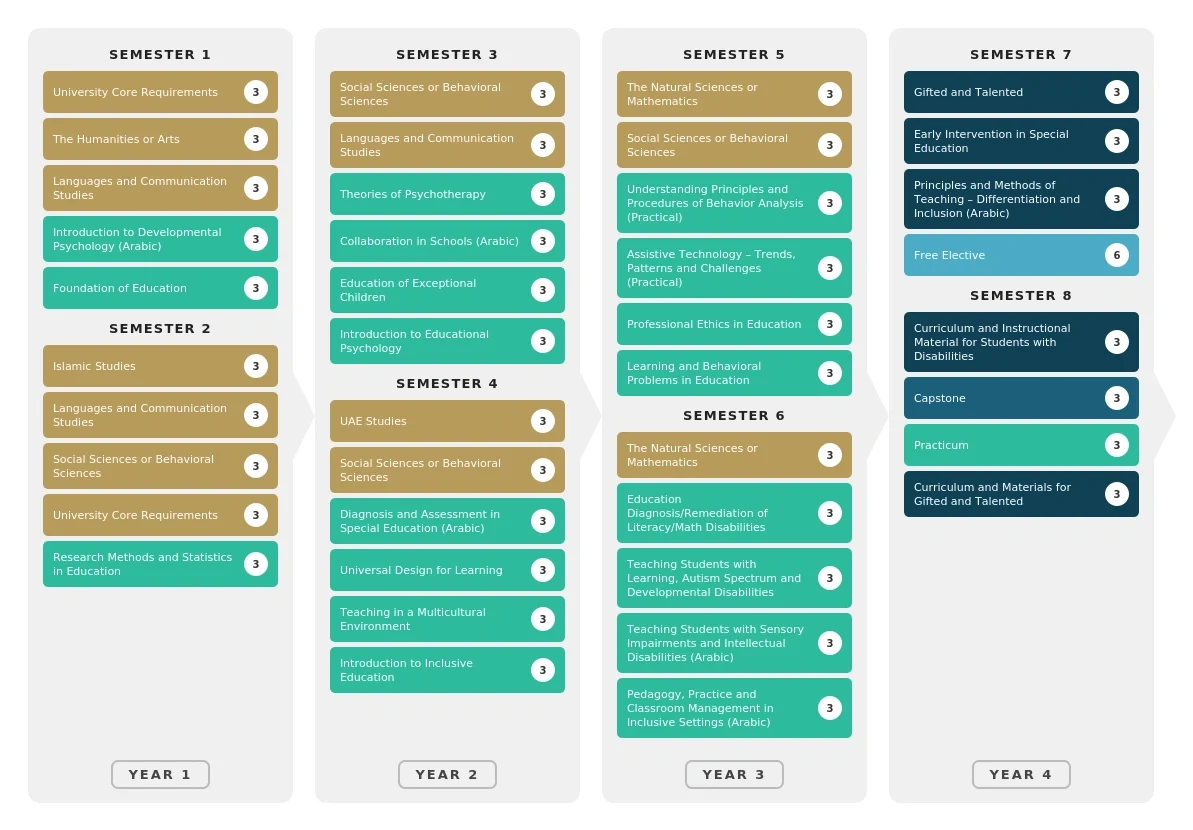
For undergraduate degree completion, undergraduate students must satisfy the following requirements:

